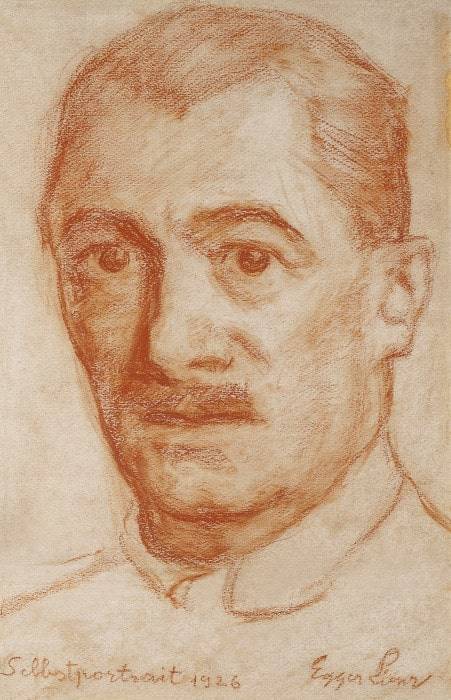
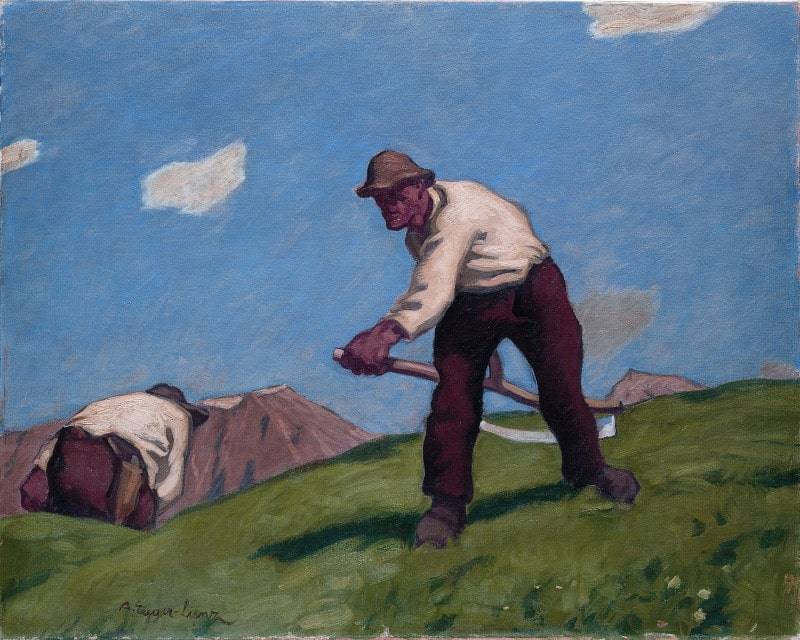
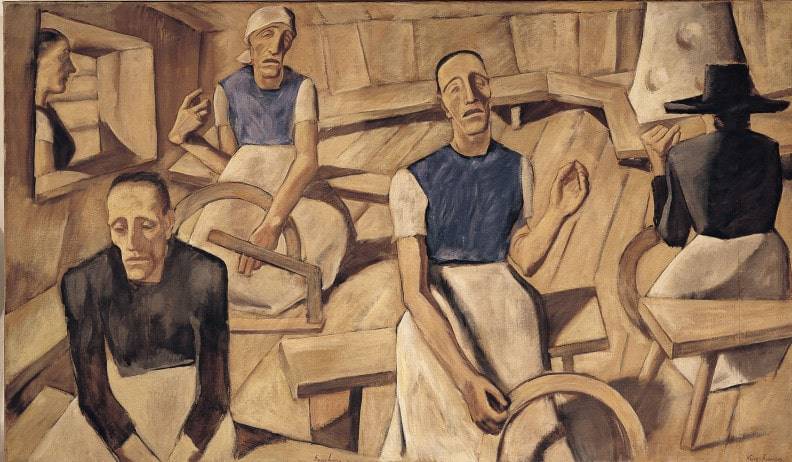
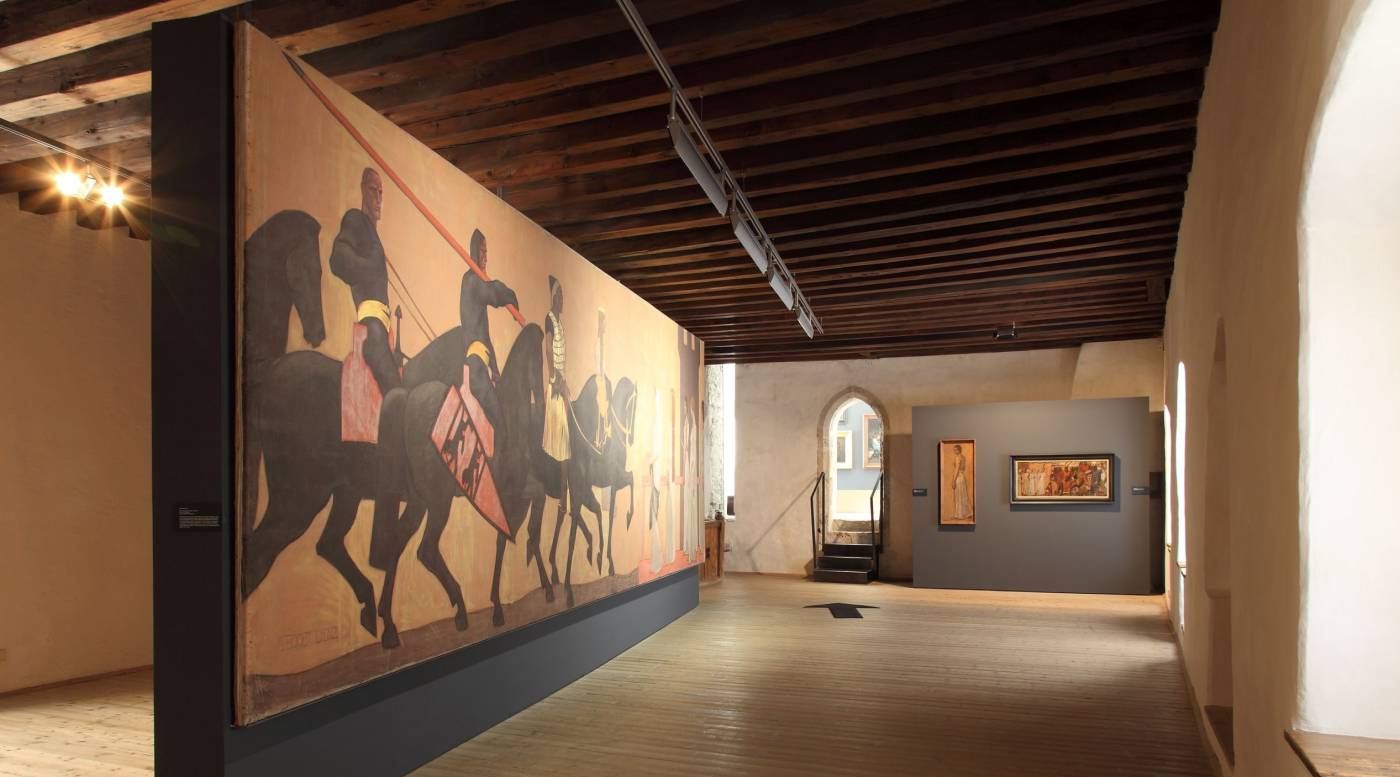
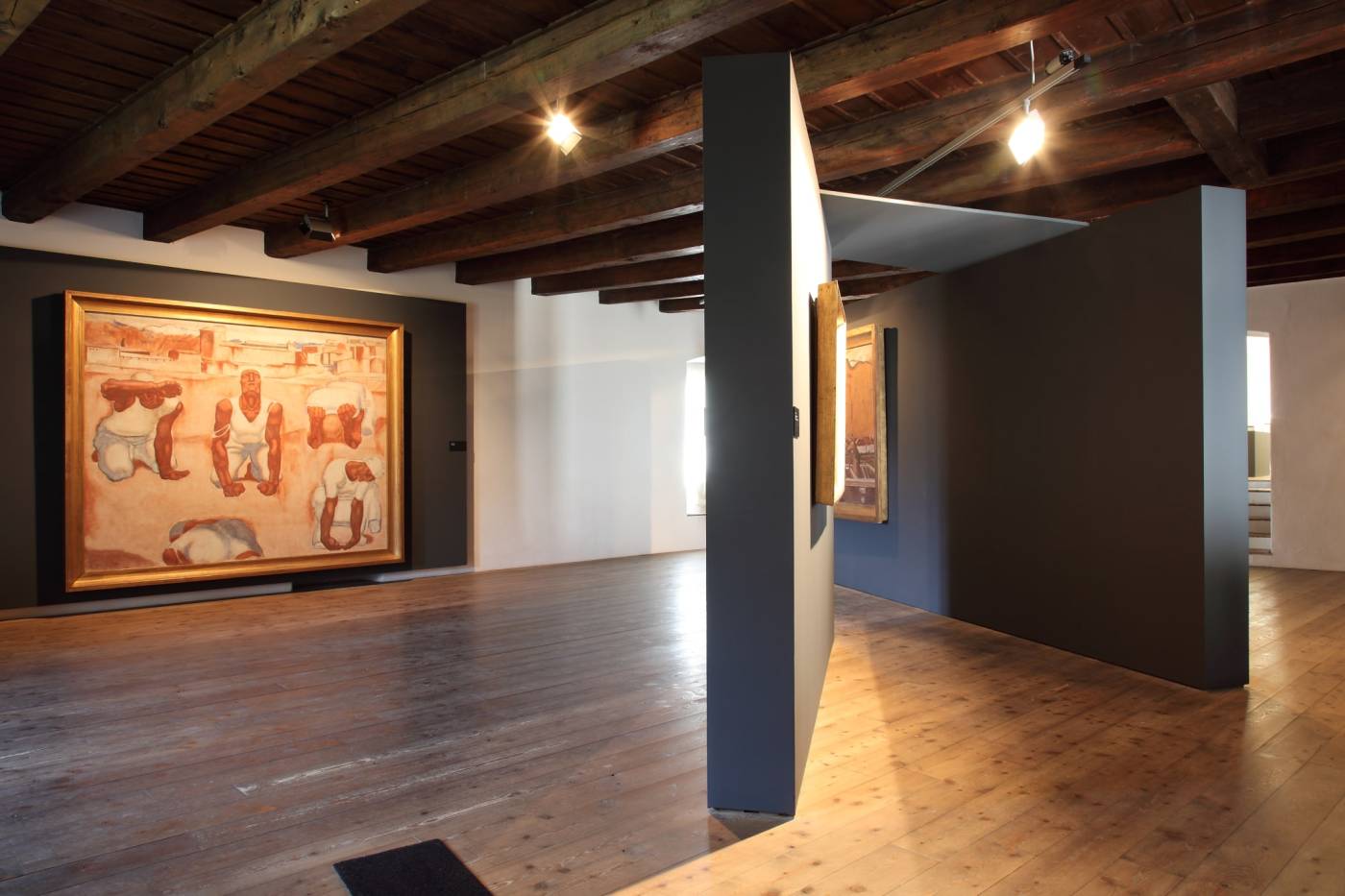
The presentation showcases the entire oeuvre from Historicism to Expressionism. The main works shed light on the fate of the rural people between life and death. The anti-war pictures are documents of an unheroic drama. Portraits and landscapes as well as insights into the graphic work complete the view of his impressive and deeply felt art.
The motives focused on human existence carry the vastness of his world of thoughts. Besides Millet, van Gogh, Hodler, Meunier, and above all Rodin, Kollwitz, Gallén-Kallela, and Munch also provided him with orientation and inspiration. The works of the French Impressionists were formally challenging. His counterposition to the Austrian painters Schiele, Kokoschka, and Faistauer is evident in his work. As an interpreter of the horrors of war and the loneliness of man, Albin Egger-Lienz always remained a admonisher ofhumanity.
By including lesser-known works and graphics from the study collection, an expanded view of the entire work is possible.
The Egger-Lienz collection at Schloss Bruck also reflects the history of collecting: the works acquired during the Nazi era were investigated regarding their origin from confiscated Jewish property. Seven works were restituted in 1950/54, and three more works in recent years.
 Quicklinks